Georgia’s Housing Policy Approach: Moving Beyond “Housing First”
Georgia’s Housing Policies have changed to bring a greater level of accountability to the sector, including new bills and programs.

In addition to funding outreach ministry, we seek to increase awareness around issues of poverty and oppression across Middle and North Georgia.

Georgia’s Housing Policies have changed to bring a greater level of accountability to the sector, including new bills and programs.

Human trafficking often occurs in rural areas, benefiting from the seclusion of locations like rest stops and bus stops.

Workforce development is crucial for creating opportunities that lead to sustainable employment and upward mobility.

Several stressors are converging in the food assistance marketplace, meaning that more support is needed for hunger-focused ministries in Georgia.
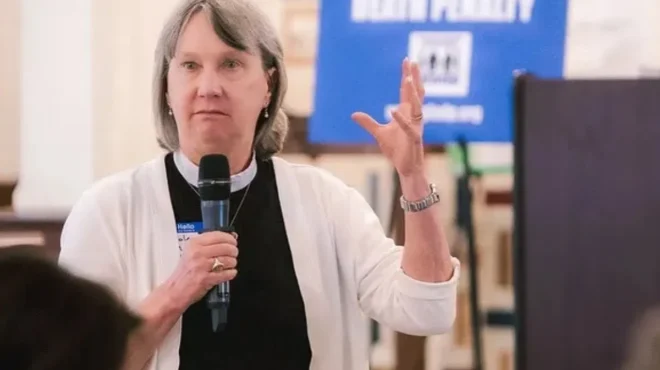
The Venerable Carole Maddux has connected with countless people who have been impacted by the criminal justice system.

Cultivating community practices of welcome is how we can get involved at the parish, local community, and national levels.

Urban homelessness tends to be more visible and easily pictured, while rural homelessness is usually more hidden.

People experiencing poverty, and particularly those who are trapped in the cycle of generational poverty, might not be able to enjoy the companionship provided by pets.

The long-standing progressive Christian view understands the harm of the death penalty.

It is a voluntary choice to become a refugee sponsor, whether through your church or a dedicated organization.

There is no one face of homelessness. It crosses all lines, and we need to break down the misconceptions surrounding the unhoused.

There is no one reason for homelessness. Therefore, there is not a cut and dry solution; we must take a holistic approach.