

The Distraction of Herod’s Temple
If the histories are to be believed, the temple in Jerusalem, Herod’s Temple, was striking in its grandeur, breathtaking in its magnificence, flawless in its design. Spanning 40 acres, built with massive, quarried limestones, the structure was clad in white marble and solid gold plates that reflected the sun, making it shine like a snow-covered mountain. Wide at the front and narrow at the back, the temple was reputed to resemble a seated lion. An awesome architectural feat, Herod’s Temple, doubtless, caused many who saw it to testify: “This is the Lord’s doing; it is marvelous in our eyes” (Psalm 118:23).
Shifting Our Gaze: Finding Sacred Worth in the Poor Widow
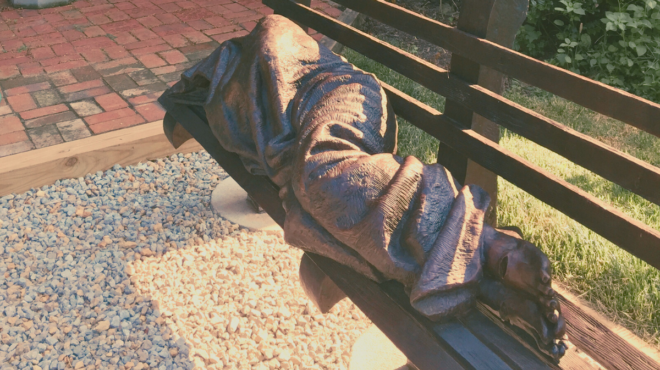
In the 21st chapter of Luke’s Gospel, while onlookers were captivated, nay distracted, by this building (Luke 21:5), Jesus was still thinking about an unassuming, poor widow, a human being and her plight. As marvelous as King Herod’s building project was, for Jesus, more marvelous still was the widow’s offering of two small copper coins, everything on which she had to live (Luke 21:1-4).
Loving this poor widow, lamenting the disconnect between what the temple ought to signify and the divisions and inequity the temple really concretized, Jesus said, “As for these things that you see, the days will come when not one stone will be left upon another; all will be thrown down” (Luke 21:6). Jesus prophesied this, his identity theft, wars and earthquakes, plagues and famines, arrests and persecution, betrayal and hatred, even death.
Jesus prophesied all these things so that when they happened, as they continued to, and still happen, where some see obstacles, we see opportunities not to despair the future, but to deepen our faith, not to tear one another down, but to build one another up.
Confronting the Blind Spot: The Reality of Generational Poverty
Jesus situated these discombobulating prophecies in Empire’s blind spot and ours: generational poverty. Because it’s personal for Jesus. Because people who have sacred worth and agency are at the heart of generational poverty. Jesus situated himself between the widow’s desperate hope and Empire’s tragic distractions, as he read the signs of the times while standing in the mess between memory and hope. And Jesus challenges us to join him there. Because it’s personal.
Building What Really Matters: Partnerships for a Sacred Community
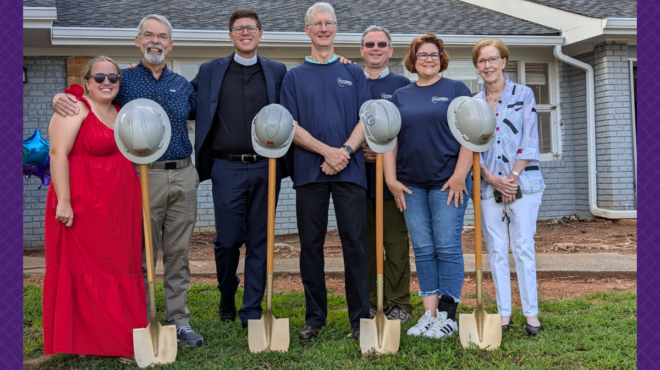
The word at the heart of ECF is ‘community.’ The Episcopal Community Foundation ever seeks to stand in the mess between memory and hope through partnerships with nonprofits like Bloom Our Youth, Emmaus House, Family Promise, Impact West Georgia, Path to Shine, countless food pantries, clothing closets, and education initiatives across the Diocese of Atlanta.
ECF maintains a humane awareness of the key drivers and reality of generational poverty: lack of access to quality education, lack of economic opportunity and assets, systemic discrimination and equity, poor health and nutrition, and a lack of support networks.
Through the information we share and the grants we provide, ECF affirms the agency, dignity, and sacred worth of the people at the heart of our community who, all too often, navigate hopelessness. This is how we build what really matters. Because that’s what Jesus did.