
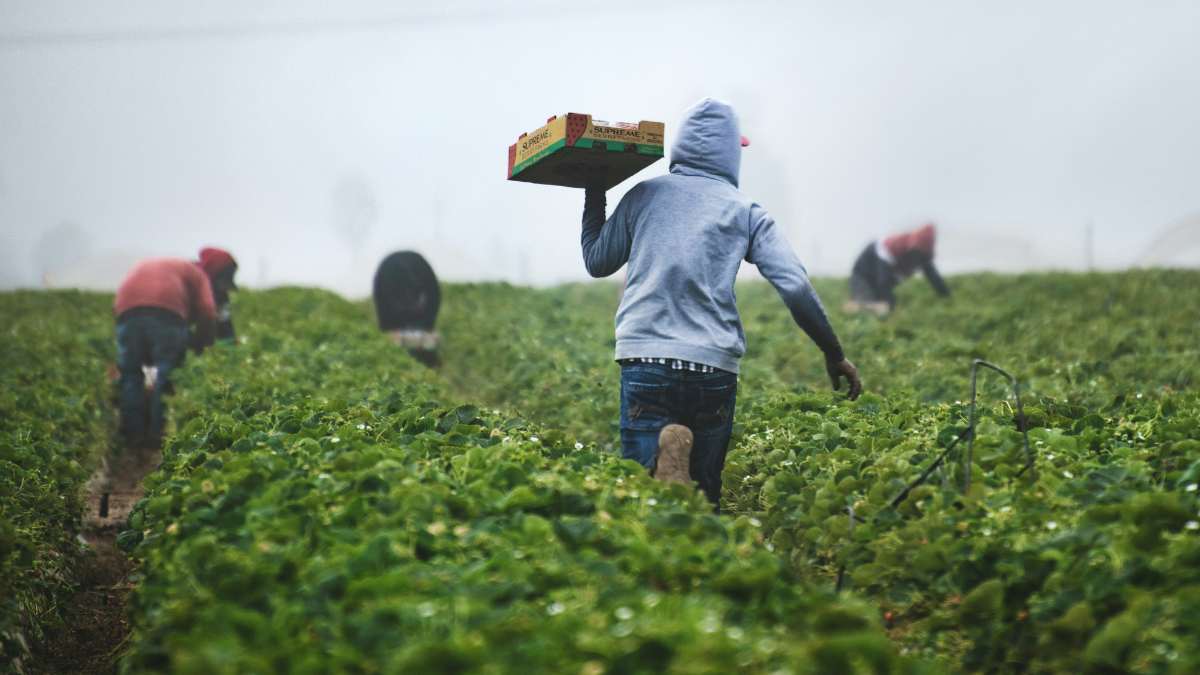
Because agriculture is so big across the our state, Georgia is a prime target for labor trafficking. This form of human trafficking involves coercing individuals into providing labor or services.
Labor traffickers frequently exploit people facing economic hardship or vulnerable circumstances. Victims can be found in both legal and illegal industries—sometimes hidden, and other times in plain sight.
Agriculture Vulnerabilities in Georgia
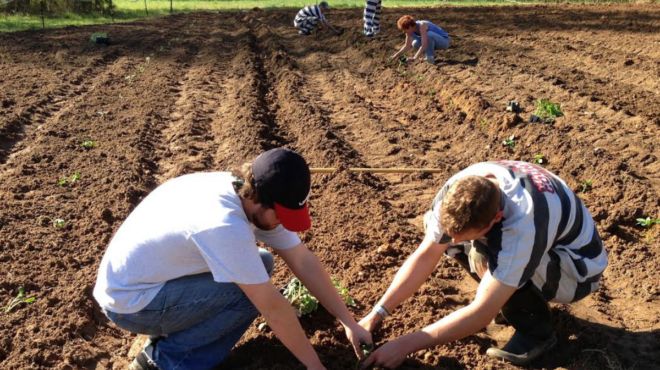
According to the Georgia Association of Chiefs of Police (GACP), Georgia has the nation’s ninth-largest economy, and one major engine is its $73.3 billion agricultural industry. Each of Georgia’s 159 counties have farmland, and the state’s top producing counties for nurseries and greenhouses, broiler chickens, and other commodities are found in North and Central Georgia.
Across the state, 42,000 dispersed farms create significant hurdles for detection and enforcement of labor trafficking. This vulnerability is compounded by the H-2A visa program. While designed to fill labor shortages, its complexity and reliance on third-party recruiters often lead to exploitation.
Contractors often escape vetting due to a shortage of state and federal inspectors and a lack of political support for protecting foreign workers, a 2026 ProPublica investigation found. With no incentive to report abuse and a pervasive fear of retribution, these workers remain silent, so exploitation persists unchecked.
“Regulators are handicapped,” said Cesar Escalante, a University of Georgia professor of agricultural and applied economics. “They know what’s happening, but they’re incapable of enforcing the regulations.”
GCAP also reported that under Georgia law, labor trafficking is harder to prosecute than sex trafficking and penalties are lighter. Other aspects of labor trafficking are similar to sex trafficking. Both remain largely underground because both rely on secrecy, deception, and the total isolation of victims who are often too terrified to seek help.
This is especially true for foreign nationals, whose vulnerability is heightened by language barriers, a lack of familiarity with U.S. laws, and a pervasive fear of arrest or deportation. Illegal recruitment debt adds to a climate of fear that traffickers and unscrupulous employers leverage to maintain control.
Labor Trafficking is Not Only Farmworkers
The GCAP report notes that labor trafficking also occurs frequently in construction—both residential and commercial—as well services including hotels, food service, nail salons, and massage businesses. This trafficking is also prevalent in manufacturing sectors like automotive, electronics, and industrial production, and extends into entertainment enterprises ranging from sports teams to strip clubs and escort services.
Georgia licenses 1.5 million corporations, and the state recently began recruiting them for Georgia Businesses Against Trafficking (GBAT). GBAT works to identify and report “rampant” trafficking of people for sex or labor. Training and resources will ramp up as the FIFA World Cup comes to Atlanta in summer 2026, expected to bring a spike in human trafficking.
“It’s huge and it’s also horrible,” said Secretary of State Brad Raffensperger recently. “It’s people selling people, whether through sex or labor.”
“This is happening in our backyards, from our urban centers to our coastal and rural communities,” he added. “If we want to eliminate this reprehensible practice, we must all join the fight to eradicate trafficking.”
How Episcopal Churches Can Help
“Human trafficking, which includes labor trafficking, is a critical community issue for ECF,” Executive Director Lindsey Hardegree said.
ECF helps to resolve important issues around poverty and oppression in our local communities, including efforts around human trafficking. The foundation welcomes grant applications from parishes and their nonprofit partners who are working with people facing labor trafficking. To discuss the work your community is doing, contact us today.